
How do I plan a Ranthambore safari from Jaipur?
How Do I Plan a Ranthambore Safari from Jaipur?
How Do I Plan a Ranthambore Safari from Jaipur?
Planning a Ranthambore safari from Jaipur is a fantastic way to add wildlife and adventure to a Rajasthan itinerary. Jaipur gives you the colorful palaces, forts and markets of Rajasthan, while Ranthambore National Park offers a completely different experience: dry forests, lakes, ancient ruins and the possibility of seeing a Bengal tiger in the wild. The two destinations work especially well together because Ranthambore is reachable from Jaipur by road and rail, making it practical to include a safari without dramatically changing your travel plans. However, a successful trip requires more than simply booking a hotel and turning up at the park. Safari permits, vehicle availability, safari zones, park timings, transportation and accommodation all need to be considered. You also need realistic expectations because Ranthambore is a wildlife reserve, not a zoo. Nobody can guarantee a tiger sighting, no matter how attractive a tour advertisement sounds. The smartest approach is to plan at least one night in Ranthambore, preferably two if wildlife is a major priority, and book your safari permits as early as possible.
Why Visit Ranthambore from Jaipur?
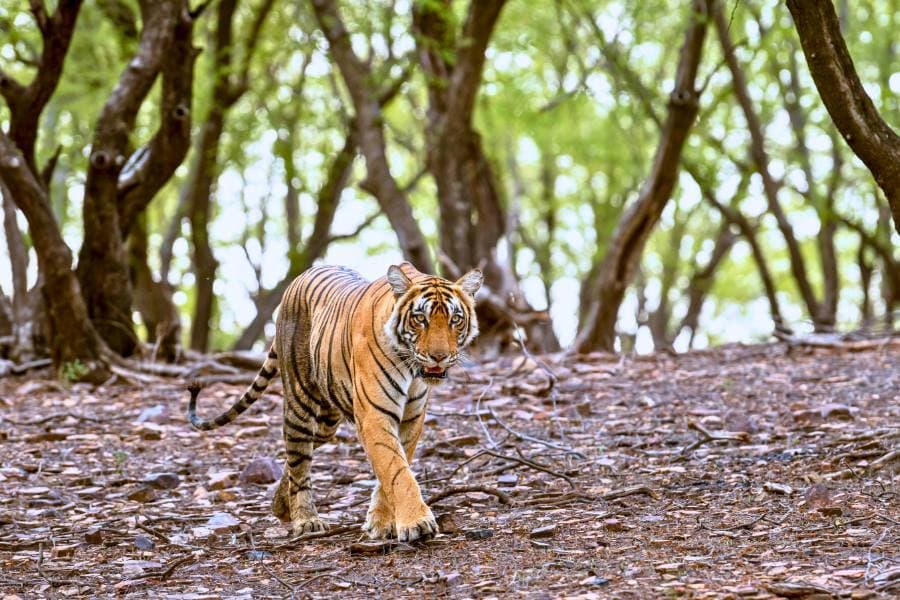
Ranthambore National Park is one of India's best-known tiger reserves and is particularly popular with travelers exploring Rajasthan. Its landscape is visually striking, with forests, grasslands, rocky hills, lakes and the historic Ranthambore Fort creating a setting that feels almost cinematic. For visitors already planning to travel between Jaipur and destinations such as Agra, Delhi or Udaipur, adding Ranthambore can provide a welcome change of pace. Instead of spending your entire Rajasthan holiday visiting palaces and monuments, you get a chance to experience one of India's most iconic wild animals in its natural habitat.
The journey also makes logistical sense. Jaipur is approximately 160–180 kilometers from the Ranthambore area, depending on your exact route and destination, so a private road transfer generally takes several hours. Trains are another possibility, with Sawai Madhopur being the main railway station used by visitors to Ranthambore. Once you arrive, you can transfer to a hotel or safari lodge near the park. This means a Jaipur-to-Ranthambore trip can be built into a broader itinerary without requiring a domestic flight.
How Far Is Ranthambore from Jaipur?
The road distance between Jaipur and the Ranthambore area is roughly 160–180 kilometers, although the exact distance depends on your starting point and accommodation. By private car, the journey commonly takes around 3 to 4 hours, subject to road conditions, traffic and stops.
The most convenient road route is generally through the direction of Tonk and Sawai Madhopur. If you are traveling independently, use the actual address of your hotel when estimating journey time rather than relying solely on a generic Jaipur-to-Ranthambore distance.
The railway alternative can be useful if your broader itinerary already involves India's rail network. Sawai Madhopur Junction is the principal rail gateway for Ranthambore and is located close to the national park compared with Jaipur. From the station, hotels and safari operators can arrange transfers.
For a safari-focused trip, don't try to squeeze the park into a few hours between Jaipur and another destination. The safari schedule determines much of your day, so staying locally is the sensible option.
How Many Days Do You Need for Ranthambore?
If you are asking how to plan a Ranthambore safari from Jaipur, the first decision is how long to stay. A one-night trip is possible, but two nights is a better choice for serious wildlife enthusiasts.
With one night, you might arrive from Jaipur in the afternoon, check into your hotel and take an afternoon safari if availability and timing allow. The following morning, you can take another safari before continuing your Rajasthan journey. This gives you two potential game drives without requiring a long stay.
With two nights, you can potentially take three or four safaris, depending on the official schedule, availability and your preferred pace. Additional drives increase your opportunities to encounter wildlife, although they do not guarantee a tiger sighting.
If the tiger is the main reason you're visiting, extra safari drives are generally more valuable than adding another luxury hotel night. Wildlife follows its own timetable, and sometimes the most exciting sighting happens on the drive you almost decided to skip.
Best Way to Travel from Jaipur to Ranthambore
There are three main options: private car, train or organized tour.
A private car is usually the easiest choice for couples, families and travelers following a customized Rajasthan itinerary. Your driver can collect you from your Jaipur hotel and take you directly to your Ranthambore accommodation. The journey also allows you to stop for refreshments or photographs if desired.
The train can be cheaper and offers an authentic Indian travel experience. However, train schedules may not always align perfectly with your safari plans, and you will need a local transfer between Sawai Madhopur station and your hotel.
An organized tour is convenient if you want someone else to coordinate accommodation, transportation and safari bookings. When comparing packages, don't look only at the advertised price. Check whether the package includes park permits, vehicle charges, guide/naturalist fees, hotel transfers and meals.
Jaipur to Ranthambore by Private Car
For many visitors, a private car from Jaipur to Ranthambore is the most comfortable option. You can leave your hotel at a convenient time and travel directly to your accommodation near the park.
This option becomes especially attractive when traveling as a couple or family because the vehicle cost can be divided among several people. It also works well if Ranthambore is just one stop in a larger Rajasthan itinerary.
Before booking, confirm whether the quoted transportation price includes fuel, tolls, parking, driver's allowance and waiting time. Some operators quote a low base price and add these expenses later.
An air-conditioned vehicle is particularly useful during warmer months. Rajasthan's weather can be intense, and a comfortable transfer makes the transition from Jaipur's urban environment to Ranthambore much easier.
Jaipur to Ranthambore by Train
Traveling by train from Jaipur to Sawai Madhopur can be a convenient alternative to driving. Several trains operate on routes connecting Jaipur and Sawai Madhopur, but schedules and availability change, so check the current railway timetable for your travel date.
The biggest advantage is that you can avoid road traffic and potentially reduce transportation costs. Train travel can also be enjoyable if you want to experience part of India's famous railway network.
The important detail is that Sawai Madhopur is not your hotel. After getting off the train, you still need a taxi or hotel transfer to reach the Ranthambore accommodation area.
If you have a safari booked shortly after arrival, allow sufficient time for the station transfer. A delayed train should not leave you sprinting into a safari departure point with your luggage.
When Should You Book Your Ranthambore Safari?
Safari availability is one of the most important parts of planning your trip. Book as early as possible, particularly if you are traveling during the popular winter and spring months.
Ranthambore safaris operate according to official schedules, and popular dates can fill up. If your travel dates are fixed, waiting until you arrive in Jaipur can leave you with fewer choices.
Booking early is particularly important if you want a specific safari vehicle, preferred zone or morning departure. Availability can vary, and the exact options offered to you depend on the official booking system and current park regulations.
Be cautious with websites promising a guaranteed tiger sighting or making unrealistic claims about specific zones. No ethical safari operator can guarantee that you will see a wild tiger.
Jeep or Canter: Which Safari Vehicle Is Better?
Ranthambore commonly offers safari experiences using different vehicle types, including smaller gypsy-style vehicles and larger canter vehicles, subject to current park rules and availability.
A smaller vehicle generally provides a more intimate experience and can be advantageous for photography because there are fewer passengers. It can also feel more personalized.
A canter carries more visitors and can therefore be a more economical choice. If your main objective is simply experiencing the park and wildlife rather than having a private photographic experience, it can provide good value.
Prices vary according to vehicle type, permit category and booking arrangements. When comparing a safari package, confirm exactly which vehicle you are receiving rather than assuming every safari costs the same.
Understanding Ranthambore Safari Zones
One of the more confusing parts of Ranthambore safari booking is the park's zone system. The reserve is divided into different safari zones, and visitors may receive access to particular areas depending on their permit and booking.
Travelers often hear that certain zones are "better" for tigers. Wildlife sightings, however, change constantly. A tiger that was seen repeatedly in one area last week may move somewhere completely different.
Instead of becoming obsessed with finding the supposedly perfect zone, focus on getting multiple safari opportunities. A good guide, favorable conditions and a little luck are much more important than believing one zone guarantees a sighting.
Best Time for a Ranthambore Safari
The best time for a Ranthambore tiger safari depends on your priorities.
The cooler months, especially from October through March, are popular because temperatures are generally more comfortable for sightseeing and game drives. The landscape can also be attractive during this period.
The hotter months can be challenging for visitors, but they may offer interesting wildlife-viewing conditions because animals sometimes become more active around water sources. April and May can be particularly hot, so anyone traveling then should prepare appropriately.
Park operating periods and zone availability can vary seasonally. Some areas may have different access arrangements depending on the time of year, so verify the current regulations before booking.
If your primary goal is wildlife rather than comfortable weather, don't automatically dismiss the hotter months. Just understand that a safari under strong Rajasthan heat requires preparation.
What Time Are Ranthambore Safaris?
Ranthambore generally offers morning and afternoon safari sessions, with exact departure and return times varying according to season and official park schedules.
Morning safaris are popular because temperatures are cooler and wildlife can be active after the night. Afternoon drives can also be rewarding, especially as temperatures change and animals move toward water or shaded areas.
Which is better? There isn't a universal answer. If you have only one safari, many travelers prefer the morning session. If you have multiple permits, combining morning and afternoon drives gives you a broader range of conditions.
The best strategy is to avoid treating one safari as your only chance. Wildlife photography requires patience, and even experienced guides cannot control what happens inside the forest.
How Much Does a Ranthambore Safari Cost?
The Ranthambore safari cost varies according to vehicle type, permit category, season, booking channel and whether transportation or accommodation is included.
For planning purposes, travelers should budget separately for:
- Safari permit
- Vehicle charges
- Guide or naturalist fees
- Transportation from the hotel
- Accommodation
- Meals
- Optional activities
Official prices can change, so travelers should verify the current rates through the authorized Ranthambore booking system or their reputable tour provider before making payment.
A package that appears more expensive may actually be better value if it includes hotel accommodation, private transfers, safari permits and meals. Conversely, an inexpensive safari listing may cover only the basic permit.
Always ask for an itemized quotation.
Where Should You Stay in Ranthambore?
The best place to stay is generally around the Sawai Madhopur/Ranthambore tourism area, where numerous hotels, resorts and wildlife lodges cater to safari visitors.
Accommodation ranges from affordable guesthouses to boutique properties and luxury resorts. Budget travelers can find simple rooms, while travelers seeking a more immersive experience can choose properties designed around the surrounding landscape.
Your hotel's location matters because safari departure times can be early. Staying closer to your designated pickup point can reduce unnecessary morning travel.
If wildlife is your priority, don't choose a hotel solely because it has a swimming pool or elaborate decor. Look at distance from safari pickup points, recent reviews, transfer arrangements and breakfast timings.
Sample 2-Day Ranthambore Itinerary from Jaipur
A two-day itinerary provides a useful balance between convenience and wildlife opportunities.
Day 1: Jaipur to Ranthambore
Leave Jaipur in the morning by private car or train. After reaching Ranthambore, check into your hotel and have lunch. If your schedule and permit allow, take an afternoon safari. Return to your hotel in the evening, relax and have dinner.
Day 2: Morning Safari and Departure
Wake early and take a morning safari. Return to the hotel for breakfast and check out. You can then continue by road or rail to your next Rajasthan destination.
If you are particularly interested in tigers, consider staying an additional night. More safari drives generally mean more opportunities to experience different areas and conditions.
Can You Combine Ranthambore with Jaipur and Agra?
Absolutely. Ranthambore fits naturally into a Golden Triangle and Rajasthan itinerary.
A common route might be:
Delhi → Agra → Ranthambore → Jaipur → Delhi
or:
Delhi → Jaipur → Ranthambore → Agra → Delhi
The best sequence depends on your transportation and wider itinerary.
Adding Ranthambore between Agra and Jaipur can be particularly appealing for travelers who want to combine the Taj Mahal with Rajasthan's wildlife. Instead of spending the entire vacation visiting monuments, you get a completely different environment.
If you are already planning a Golden Triangle India tour, adding two nights in Ranthambore is one of the easiest ways to extend the trip into a broader Rajasthan adventure.
What Should You Pack for a Ranthambore Safari?
Packing for a safari is relatively simple, but clothing choices matter.
Wear comfortable clothing suitable for the season and bring a lightweight jacket for early morning drives during cooler months. Neutral or earthy colors are generally practical because they are comfortable and less visually distracting in a wildlife environment.
You should also carry:
- Sunglasses
- Sunscreen
- Hat or cap
- Water bottle
- Camera and spare battery
- Binoculars
- Comfortable closed shoes
- Light jacket during cooler months
Avoid carrying unnecessary luggage into the safari vehicle. Space can be limited, particularly on shared vehicles.
A pair of binoculars can make a surprisingly big difference. Tigers are not always standing ten meters away beside the road; sometimes wildlife appears at a distance, and binoculars let you appreciate details you might otherwise miss.
What Wildlife Can You See Besides Tigers?
Although the Bengal tiger is Ranthambore's biggest attraction, it is far from the only wildlife worth watching.
Depending on the season and your luck, you may encounter leopards, sloth bears, sambar deer, chital, wild boar, crocodiles, nilgai and numerous bird species.
The park's birdlife is especially interesting. Water bodies and woodland habitats attract a variety of resident and migratory birds, making the reserve rewarding even when the tigers decide to remain hidden.
This is an important mindset shift for first-time safari visitors. If you spend three hours thinking only about the tiger, you might overlook a beautiful bird, an enormous crocodile or a herd of deer moving through the forest.
The forest itself is part of the experience.
How to Increase Your Chance of Seeing a Tiger
There is no guaranteed formula for seeing a tiger in Ranthambore. However, you can improve your overall opportunity by taking multiple safaris, listening carefully to your guide and staying patient.
Tigers may be identified through tracks, alarm calls, movement patterns and other signs. Experienced guides and naturalists spend enormous amounts of time learning the behavior of the forest.
If you hear deer suddenly giving alarm calls or see several safari vehicles becoming unusually attentive to one area, something interesting may be happening. But don't assume every alarm call means a tiger. Forests are full of interactions between predators, prey and birds.
Most importantly, respect park regulations and wildlife. Do not ask your driver to chase an animal, block another vehicle or disturb wildlife for a photograph.
A respectful safari is a better safari.
Is Ranthambore Worth Visiting from Jaipur?
Yes, especially if wildlife is important to you. Jaipur and Ranthambore offer completely different experiences, and that contrast is precisely what makes the combination so enjoyable.
One day you might be standing inside a centuries-old palace surrounded by Rajasthan's urban energy. The next morning you could be sitting quietly in a forest listening for alarm calls.
That change of scenery can make a Rajasthan itinerary feel much richer.
If your schedule is extremely short, however, you may prefer to concentrate on Jaipur and the Golden Triangle. A safari involves uncertainty, and there is no guarantee of seeing a tiger. But if you have at least two nights available, Ranthambore can be a memorable addition.
Common Mistakes to Avoid
The first mistake is booking only one safari and expecting a guaranteed tiger sighting. Wildlife doesn't work that way. Additional drives improve your chances of seeing different animals and experiencing the park under different conditions.
The second mistake is choosing a hotel far from your safari arrangements simply because it is cheaper. Saving a little on accommodation may not be worthwhile if you spend extra time and money getting to your departure point.
Another mistake is failing to check the details of your safari booking. Make sure you understand the vehicle type, zone allocation, departure time and included services.
Finally, don't turn the safari into a photography competition. Put the camera down occasionally and watch the forest. A tiger sighting lasts only a few moments, but the experience of being surrounded by the sounds and landscapes of Ranthambore can stay with you for years.
Final Ranthambore Safari Planning Tips
The simplest formula is this: travel from Jaipur to Ranthambore, stay at least one or two nights, book your safari in advance, and leave enough flexibility for wildlife to surprise you.
For convenience, a private car from Jaipur is hard to beat. For budget-conscious travelers, the train to Sawai Madhopur can be an excellent alternative. If you want everything organized, a reputable tour operator can combine transportation, accommodation and safari permits into one itinerary.
Most importantly, book through authorized or reputable channels and verify the current Ranthambore National Park safari rules, prices and operating schedule before traveling. Park regulations and booking procedures can change, so information published years ago may no longer be accurate.
Ranthambore is not simply about checking "tiger" off a travel list. It is about entering a landscape where every rustle in the grass, bird call and movement in the trees makes you wonder what might appear next.
Conclusion
A Ranthambore safari from Jaipur is relatively easy to plan and can be one of the most memorable additions to a Rajasthan itinerary. The most practical approach is to travel from Jaipur to the Sawai Madhopur/Ranthambore area by private car or train, stay locally for at least one night and arrange your safari permits before arrival.
If you have the time, two nights and multiple safari drives provide a better experience than trying to rush through the park. Choose your accommodation based on location and recent reviews, compare safari inclusions carefully, and remember that no operator can ethically guarantee a tiger sighting.
Whether you see a Bengal tiger or spend your safari watching deer, crocodiles and colorful birds, Ranthambore offers something completely different from Rajasthan's forts and palaces. Add comfortable transportation, realistic expectations and a little patience, and your Jaipur-to-Ranthambore journey can become one of the highlights of your India adventure.
FAQs About Ranthambore Safari from Jaipur
1. How far is Ranthambore from Jaipur?
Ranthambore is approximately 160–180 kilometers from Jaipur, depending on your exact route and accommodation. By road, the journey generally takes around 3–4 hours, although traffic and road conditions can affect the travel time.
2. How many days should I spend in Ranthambore?
For a quick visit, one night and two safari drives can work. If seeing wildlife is your main goal, staying two nights gives you a better opportunity to take multiple safaris and experience different morning and afternoon conditions.
3. Can I book a Ranthambore safari after arriving in Jaipur?
It may be possible depending on availability, but advance booking is recommended, particularly during popular travel periods. Waiting until the last minute can limit your choice of safari dates, vehicle types and available permits.
4. What is the best way to travel from Jaipur to Ranthambore?
A private car is usually the most convenient option because it provides door-to-door transportation. Trains to Sawai Madhopur can be a good alternative for independent travelers and may reduce transportation costs.
5. What are the chances of seeing a tiger in Ranthambore?
Ranthambore is famous for its Bengal tiger population, but no tiger sighting is guaranteed. Taking multiple safaris, using experienced guides and remaining patient can improve your opportunities, but wildlife sightings always depend on natural conditions and animal behavior.