
How Do I Plan a Taj Mahal and Agra Fort Tour?
How Do I Plan a Taj Mahal and Agra Fort Tour?
How Do I Plan a Taj Mahal and Agra Fort Tour?
Planning a trip to Agra becomes much easier when you know which attractions to prioritize, how much time to allow, and how to arrange transportation between them. The Taj Mahal and Agra Fort are the two landmarks most travelers want to experience, and fortunately, they can be visited together in a well-organized itinerary. One represents the refined architectural style of a Mughal mausoleum, while the other offers a much broader look at imperial life, military architecture, royal residences, and centuries of history. A Taj Mahal and Agra Fort Tour can therefore give you a more complete understanding of Agra than visiting the Taj Mahal alone. Whether you are traveling from Delhi for a day trip or staying overnight in Agra, the secret is to avoid trying to see everything at once. With the right timing, comfortable transportation, advance planning, and enough time at each monument, you can enjoy both attractions without feeling like you are racing from one gate to another.
Why Visit the Taj Mahal and Agra Fort Together?
The Taj Mahal and Agra Fort are closely connected by the history of the Mughal Empire, making them natural companions for the same sightseeing itinerary. The Taj Mahal is globally recognized for its symmetrical design, white marble, decorative craftsmanship, gardens, and monumental scale. Agra Fort, meanwhile, provides a different perspective, with massive defensive walls, courtyards, palaces, audience halls, mosques, and royal residences developed under successive Mughal rulers. Seeing both sites helps put the Taj Mahal into a wider historical context. Instead of viewing the famous mausoleum as an isolated monument, you begin to understand the political and architectural world in which it was created. This is particularly useful for first-time visitors who want more than a quick photograph. A thoughtfully planned Taj Mahal and Agra Fort Tour allows you to experience two UNESCO World Heritage Sites while keeping your itinerary relatively compact. Because the attractions are located in the same city, you can also avoid spending large portions of the day traveling between distant destinations.
Choose the Right Time for Your Visit
Timing can have a major effect on your Agra experience. The Taj Mahal is particularly popular during the early morning, when the weather can be more comfortable and the natural light can create beautiful conditions for photography. Visiting early can also help you complete the most important attraction before the strongest daytime heat develops, especially during warmer months. Agra's weather changes considerably throughout the year, so the ideal time of day can depend on the season. Winter mornings may be cool and sometimes hazy, while summer afternoons can become extremely hot. If you are planning to photograph the Taj Mahal, remember that weather conditions are never completely predictable. After visiting the Taj Mahal, you can continue to Agra Fort, allowing you to use the rest of the morning or early afternoon efficiently. Check the official monument schedules before your trip because opening days, hours, ticket arrangements, and visitor regulations can change. Planning around the current schedule is much safer than relying on an old travel blog or an outdated itinerary.
How Long Do You Need in Agra?
For the two main monuments, a full day gives you a comfortable schedule, while travelers coming from Delhi can also complete the trip in one day with an early start. The Taj Mahal deserves enough time to explore the gardens, exterior architecture, interior areas open to visitors, and surrounding structures without constantly watching the clock. Agra Fort is also larger and more varied than many first-time visitors expect, so it is worth allowing a substantial block of time rather than treating it as a quick photo stop. A sensible itinerary might involve reaching Agra early, visiting the Taj Mahal first, having breakfast or a meal afterward, and then spending several hours at Agra Fort before beginning the return journey. If you have additional interests, an overnight stay makes the experience more relaxed. It gives you the option of exploring local markets, trying Agra's cuisine, or visiting another attraction without squeezing everything into a few hours. For a day trip, however, the two major monuments are enough to create a rewarding sightseeing experience. The goal should be to leave enough space between activities so that a delayed departure, traffic, security check, or longer-than-expected visit does not disrupt the entire day.
Start With the Taj Mahal
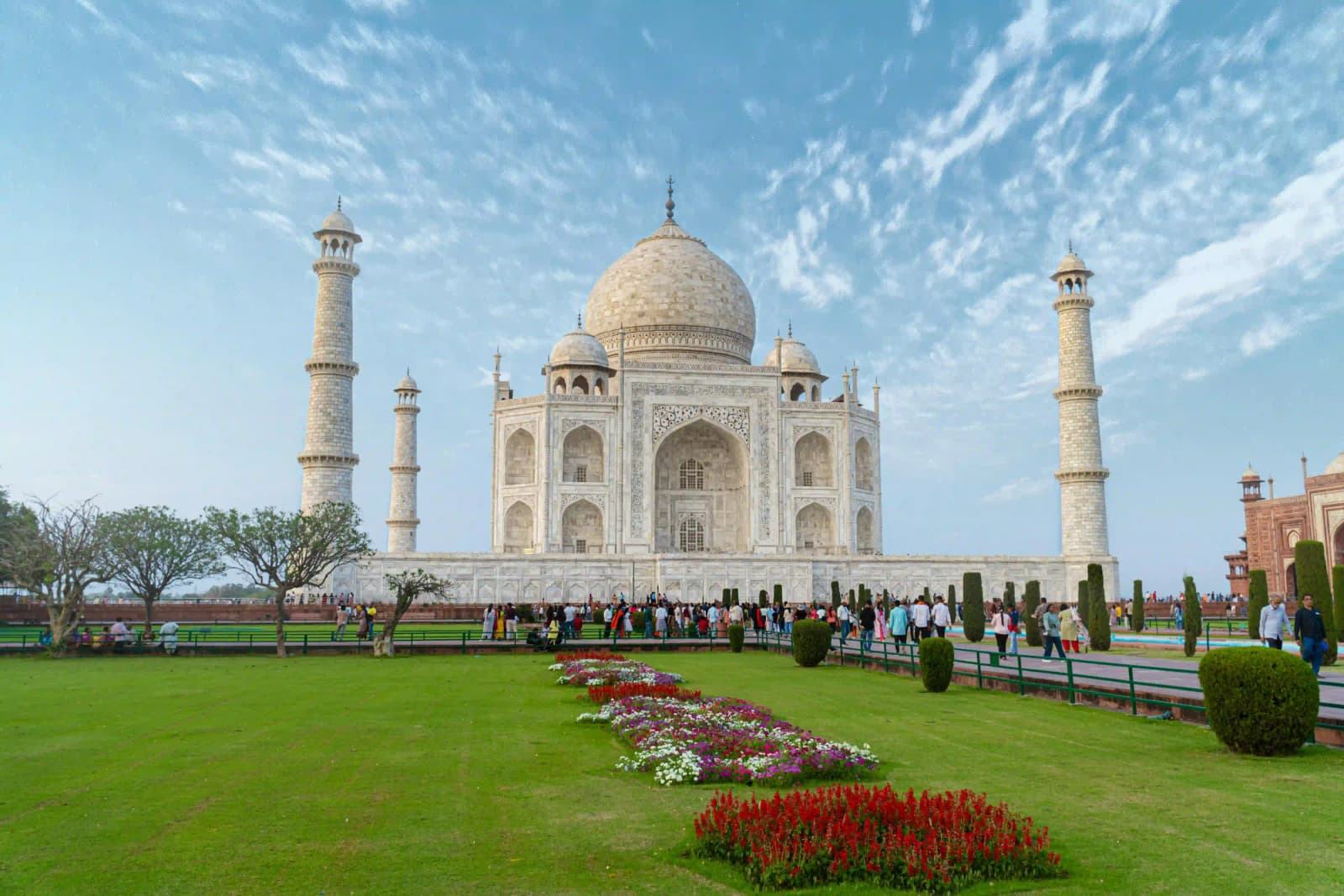
For most first-time visitors, the Taj Mahal should be the first major stop. Its appearance changes with the natural light, and early morning can provide a particularly atmospheric introduction. Before entering, make sure you understand the current ticketing and security requirements. Large bags and certain prohibited items may not be allowed inside, and security procedures can take additional time when visitor numbers are high. Once inside, resist the temptation to walk directly toward the central building without looking around. The gateway, gardens, reflecting pool, side structures, minarets, marble surfaces, and decorative details are all part of the architectural composition. The monument was commissioned by Mughal emperor Shah Jahan as a mausoleum for Mumtaz Mahal and became one of the best-known examples of Mughal architecture. Its design combines influences from several architectural traditions, while the detailed marble inlay and symmetrical planning demonstrate the extraordinary craftsmanship associated with the period. Taking time to appreciate these details will make the visit more meaningful than simply capturing the classic front-facing photograph.
Explore Agra Fort After the Taj Mahal
Once you have finished at the Taj Mahal, continue to Agra Fort. The short distance between the two attractions makes this transition relatively easy by car, taxi, auto-rickshaw, or another suitable local transport option. Agra Fort is an enormous red sandstone complex that developed over several stages and served as an important Mughal imperial residence and military stronghold. Inside, visitors encounter a mixture of defensive architecture and elegant royal spaces. Massive walls surround courtyards, while the interior contains structures associated with imperial administration and private life. The contrast with the Taj Mahal is striking. The Taj is often perceived through its white marble and carefully balanced garden setting, whereas Agra Fort immediately communicates strength through its red sandstone walls and imposing gateways. One of the most interesting aspects of visiting both on the same day is seeing how Mughal architecture could express completely different ideas. One monument emphasizes a monumental tomb and refined decoration; the other combines defense, governance, ceremony, and royal living.
Understand the History Before You Visit
A little historical preparation can transform the experience. You do not need to memorize dates or read an entire book about the Mughal Empire before traveling. Even a basic understanding of the major figures can help you connect the monuments. Akbar significantly developed Agra Fort, and later Mughal rulers expanded or altered sections of the complex. Shah Jahan is strongly associated with the Taj Mahal, but he also commissioned important marble structures within Agra Fort. The relationship between the two monuments becomes especially interesting when you learn that Shah Jahan spent his final years confined in Agra Fort after being deposed by his son Aurangzeb. Historical traditions commonly connect his confinement with views toward the Taj Mahal, although specific details surrounding the story are sometimes presented differently by sources and guides. A knowledgeable guide can explain which stories are well documented and which are part of the popular historical narrative. This context gives the monuments a human dimension and makes the stone, marble, and courtyards feel connected to real political and personal events.
Decide Between a Guide and Independent Travel
Another important planning decision is whether to hire a guide. Independent travelers can certainly visit both monuments without one, especially if they have researched the history beforehand. However, a reputable local guide can explain architectural features that are easy to overlook and provide historical context while you walk through the sites. This can be particularly useful at Agra Fort because the complex contains numerous buildings and spaces that may look similar to visitors unfamiliar with Mughal architecture. If you choose a guide, confirm the price and inclusions beforehand and use an authorized or reputable professional. Avoid feeling pressured into shopping stops simply because a guide recommends a particular store. Shopping can be included if you genuinely want it, but it should not consume the sightseeing time you planned for the monuments. Travelers who prefer independence can use an audio guide, official information, a quality travel guidebook, or carefully researched historical resources. The best option ultimately depends on whether you value convenience and interpretation or prefer exploring at your own pace.
Plan Your Transportation Carefully
Transportation is one of the most important practical details, particularly if you are visiting Agra from Delhi. By road, the journey from Delhi can take several hours depending on traffic, your starting point, route, and road conditions. The Yamuna Expressway provides a major road connection between Delhi and Agra, and private cars and taxis are commonly used for day trips. Train travel is another option and can reduce the amount of time spent traveling by road, but your train schedule must fit the monument opening times and your sightseeing plan. If you are staying in Agra, local transportation is simpler because the major attractions are relatively close together. For a Taj Mahal and Agra Fort Tour, private transportation can be particularly convenient because you can leave your luggage safely in the vehicle, move between attractions without repeatedly arranging rides, and adapt the schedule if one visit takes longer than expected. Whatever transportation you choose, avoid creating an itinerary with no buffer. A sightseeing schedule that looks perfect on paper can become stressful when even a small delay occurs.
Consider Visiting Agra Fort Before Leaving Agra
After the Taj Mahal and Agra Fort, you may have time for lunch, shopping, or another nearby attraction depending on your departure schedule. However, do not underestimate the amount of walking involved in the two main monuments. By the time you finish exploring Agra Fort, you may be ready for a proper meal and a short rest. Agra is known for several local foods, including its famous petha sweet, while North Indian dishes are widely available throughout the city. If you are interested in handicrafts, marble inlay products are particularly associated with Agra, but travelers should compare prices and understand what they are purchasing. Shopping is best treated as an optional part of the itinerary rather than an obligation. If your return train or road journey is scheduled for a particular time, prioritize reaching your departure point comfortably instead of adding another attraction at the last minute. A relaxed ending to the day is much better than discovering that a shopping stop or extended lunch has caused you to miss your transportation.
What Should You Wear and Carry?
Comfortable clothing and footwear are essential for a sightseeing day in Agra. Both monuments involve considerable walking, and comfortable shoes will make the experience much easier. Your clothing should match the weather, which can range from chilly winter mornings to very hot summer afternoons. During warmer months, lightweight clothing, sunscreen, sunglasses, and adequate drinking water can be useful. During winter, layering is practical because early mornings can be significantly cooler than later in the day. Keep your belongings relatively light because security restrictions may apply at monument entrances. Before leaving for your trip, check the latest rules concerning cameras, bags, food, and other personal items. Carry identification and any required ticket or booking information. A portable phone charger can also be helpful if you rely on your smartphone for tickets, navigation, photography, or communication. These small preparations may sound insignificant, but they can prevent unnecessary interruptions once you arrive.
Can You Visit Both Attractions in One Day?
Yes, visiting both attractions in one day is practical for most travelers, provided the itinerary starts early and does not contain too many additional stops. The most straightforward approach is to make the Taj Mahal your first major attraction and Agra Fort your second. This sequence works well because the Taj Mahal is generally the main reason for the trip, while Agra Fort can follow naturally as a historical and architectural complement. Afterward, you can have lunch and either return to Delhi or continue exploring Agra if you are staying overnight. If you are traveling from Delhi, a private vehicle can provide greater flexibility, while train travelers should work backward from their return departure. Avoid scheduling a very late return if you have another important commitment in Delhi that evening. Traffic and transportation delays are always possible. A day trip should be enjoyable rather than a race against the timetable.
Is an Overnight Stay Better?
An overnight stay is worth considering if you have more time available. Staying in Agra removes the pressure of completing the entire experience within a single day and gives you more opportunities to explore beyond the two headline attractions. You could visit Mehtab Bagh, explore local markets, enjoy a slower meal, or simply rest after sightseeing. An overnight stay can also be attractive if you want to experience the Taj Mahal at a particular time of day without having to wake up extremely early in Delhi. On the other hand, travelers with limited time may not want to change hotels or dedicate an additional night to the city. If Delhi is your primary base and your schedule is tight, a carefully organized day trip remains a practical choice. The decision should therefore be based on your overall India itinerary rather than on the Taj Mahal alone.
Tips for a Smooth Taj Mahal and Agra Fort Tour
A few simple habits can make your sightseeing day considerably easier. First, verify the latest official opening information and ticket requirements shortly before traveling. Second, keep your itinerary realistic and leave buffer time for security, transportation, meals, and unexpected delays. Third, choose comfortable footwear and clothing appropriate for the season. Fourth, arrange your transportation before arriving rather than spending valuable sightseeing time negotiating rides. Finally, research your guide or tour provider carefully if you decide to use one.
It is also helpful to download maps or important travel information before leaving, particularly if you expect periods without reliable internet access. Keep copies of important booking details and identification information where you can access them easily. If you are traveling during a particularly hot period, schedule outdoor walking for the cooler parts of the day whenever possible. During colder months, check the forecast because morning haze can influence visibility and photography. Small decisions like these can make the difference between an exhausting itinerary and a comfortable one.
Why This Combination Works So Well
The real strength of a Taj Mahal and Agra Fort Tour is the contrast between the two monuments. The Taj Mahal is associated with memory, symmetry, marble craftsmanship, and a monumental expression of love and loss. Agra Fort is a sprawling imperial complex where architecture served practical, political, ceremonial, and residential purposes. Visiting both creates a much broader picture of Mughal history than visiting either one independently.
The two sites also complement each other visually. The Taj Mahal's white marble provides a striking contrast with Agra Fort's red sandstone. Their architectural forms are different, their purposes were different, and yet they belong to the same historical world. For travelers who have only limited time in Agra, this makes the combination particularly efficient. You can spend the first part of the day experiencing one of India's most famous monuments and the next part exploring a major imperial fort without traveling across the city for hours.
Final Thoughts
A well-planned Taj Mahal and Agra Fort Tour does not need to be complicated. Start by deciding whether you are making a day trip from Delhi or staying overnight in Agra, then build your schedule around the official opening times of the attractions. Visit the Taj Mahal early if you want cooler conditions and morning light, and follow it with Agra Fort to explore a very different side of Mughal architecture and history.
Give yourself enough time to walk, take photographs, listen to your guide if you have one, and simply appreciate the surroundings. Avoid overcrowding your itinerary with too many attractions, particularly if you are traveling from Delhi and returning the same day. Comfortable transportation, appropriate clothing, advance planning, and a little flexibility will make the journey much easier.
For most first-time visitors, combining these two monuments provides an excellent introduction to Agra. You get the iconic beauty of the Taj Mahal alongside the historical depth of Agra Fort, creating a day that is both visually impressive and culturally rewarding.
FAQs
1. How much time do I need for the Taj Mahal and Agra Fort?
A full day is generally sufficient for both attractions when planned efficiently. Allow several hours for the Taj Mahal and a substantial block of time for Agra Fort, with additional time for transportation and meals.
2. Can I visit the Taj Mahal and Agra Fort from Delhi in one day?
Yes. Many travelers make Agra a day trip from Delhi. An early departure gives you more time for sightseeing and makes it possible to visit both major monuments before returning to Delhi.
3. Which should I visit first, the Taj Mahal or Agra Fort?
For most itineraries, visiting the Taj Mahal first is practical, particularly if you want to see it in the morning. Agra Fort can then be visited afterward without requiring a major change to your route.
4. Do I need a guide for Agra Fort?
A guide is not essential, but it can add historical and architectural context. If you prefer exploring independently, you can research the monument beforehand or use available official information and reputable travel resources.
5. What is the best way to travel between Delhi and Agra?
You can travel by road using a private car or taxi, or use a train connecting Delhi and Agra. The most suitable option depends on your preferred departure time, budget, flexibility, and whether you want transportation to remain available throughout your sightseeing day.