
How to Combine Varanasi with Delhi Agra Jaipur?
How to Combine Varanasi with Delhi Agra Jaipur?
How to Combine Varanasi with Delhi Agra Jaipur?
Combining the spiritual atmosphere of Varanasi with the historic cities of Delhi, Agra, and Jaipur is an excellent way to experience several sides of India in one memorable journey. Delhi introduces you to India's capital and its rich history, Agra is home to the world-famous Taj Mahal, Jaipur showcases royal Rajasthan, and Varanasi offers a deeply spiritual experience along the sacred Ganges River.
Planning Varanasi with Delhi Agra Jaipur requires a little more organization than a standard Golden Triangle tour because Varanasi is located in eastern India, while Delhi, Agra, and Jaipur are relatively close to one another. The good news is that excellent flight and train connections make it possible to combine these destinations comfortably.
A well-planned itinerary can take around 7 to 10 days, depending on how much time you want to spend in each city. With the right transportation and hotel locations, you can enjoy major attractions without making the trip unnecessarily tiring.
Why Combine Varanasi with the Golden Triangle?
The Golden Triangle—Delhi, Agra, and Jaipur—is one of India's most popular travel routes. Adding Varanasi gives the journey a completely different cultural and spiritual dimension.
Delhi combines Mughal, colonial, and modern Indian history. Agra is famous for the Taj Mahal and other Mughal monuments. Jaipur is known for its forts, palaces, colorful markets, and royal heritage. Varanasi, meanwhile, is one of the world's oldest continuously inhabited cities and is famous for its ghats, temples, evening Ganga Aarti, and spiritual traditions.
The contrast between these destinations makes the journey particularly interesting. You can visit grand monuments in Agra, explore royal architecture in Jaipur, and then experience the peaceful yet energetic atmosphere along the Ganges in Varanasi.
How Many Days Do You Need?
For a comfortable trip, plan for at least 8 days. If you have more time, 9 or 10 days will allow you to explore the cities at a slower pace.
A practical itinerary could look like this:
Day 1: Arrive in Delhi and explore Old Delhi
Day 2: Delhi sightseeing
Day 3: Delhi to Agra and visit the Taj Mahal
Day 4: Agra to Jaipur via Fatehpur Sikri
Day 5: Jaipur sightseeing
Day 6: Jaipur to Varanasi by flight
Day 7: Varanasi sightseeing and Ganga Aarti
Day 8: Sunrise at the Ganges and departure
If you want additional time in Varanasi, add another day. Similarly, travelers interested in Jaipur's forts and local culture may want two full days there.
Start Your Journey in Delhi
Delhi is usually the most convenient starting point because it has major international and domestic flight connections. Spending two days in Delhi gives you enough time to see the city's most important attractions.
On your first day, explore Old Delhi, including Jama Masjid, Chandni Chowk, and the area around the Red Fort. You can also enjoy traditional Indian food and experience the busy streets of one of the city's oldest neighborhoods.
The second day can focus on New Delhi and its major landmarks. Depending on your interests, you can visit India Gate, Humayun's Tomb, Qutub Minar, Lotus Temple, and other important sites.
Try not to schedule too many attractions in one day. Delhi is large, and traffic can significantly affect travel times.
Travel from Delhi to Agra
After exploring Delhi, travel to Agra. The distance is approximately 230 kilometers, and the journey can be completed by road or train.
A private car is a convenient option because it allows you to travel according to your own schedule. The journey generally takes several hours depending on traffic and road conditions.
Another popular option is the train. Several trains connect Delhi and Agra, making rail travel a practical choice for travelers who prefer a faster journey.
Once you arrive in Agra, check into your hotel and visit the Taj Mahal if your schedule allows.
Explore the Taj Mahal in Agra
The Taj Mahal is the highlight of most Agra itineraries. Built by Mughal emperor Shah Jahan in memory of his wife Mumtaz Mahal, the monument is recognized around the world for its white marble architecture and detailed craftsmanship.
Early morning is often a pleasant time to visit because the weather can be cooler and the light can create beautiful views of the monument.
After visiting the Taj Mahal, explore Agra Fort, another major Mughal monument. The fort offers impressive architecture and historical connections to the Mughal dynasty.
If you have extra time, you can also visit Mehtab Bagh for views of the Taj Mahal from across the Yamuna River.
Agra to Jaipur via Fatehpur Sikri
After exploring Agra, continue toward Jaipur. A private car is especially useful on this section because you can stop at Fatehpur Sikri along the way.
Fatehpur Sikri was built during the reign of Emperor Akbar and served as the Mughal capital for a relatively short period. Its impressive red sandstone architecture includes palaces, courtyards, mosques, and other historic structures.
After sightseeing, continue to Jaipur and check into your hotel.
The road journey gives you the opportunity to see parts of rural northern India that you might miss when traveling only by air.
Explore the Pink City of Jaipur
Jaipur is the final major destination of the traditional Golden Triangle. The city is famous for its royal heritage, colorful markets, forts, and distinctive architecture.
Start your sightseeing with Amber Fort, located outside the main city. The fort sits on a hill and features courtyards, gateways, palaces, and detailed artistic work.
You can then visit the City Palace, Jantar Mantar, and Hawa Mahal. Jaipur's old city is also an excellent place for shopping, particularly if you are interested in textiles, jewelry, handicrafts, and traditional souvenirs.
In the evening, enjoy a traditional Rajasthani meal or explore one of the city's markets.
How to Travel from Jaipur to Varanasi
This is the part of the journey that requires the most planning. Jaipur and Varanasi are separated by a considerable distance, so traveling by road is generally not the most efficient choice for a short holiday.
Flying is usually the most convenient option. Depending on the available schedule, you may find direct flights or flights requiring a connection.
Taking a train is another possibility, particularly for travelers who enjoy rail journeys. However, train travel can take considerably longer, so check the schedule before finalizing your itinerary.
For most travelers trying to maximize sightseeing time, a flight between Jaipur and Varanasi makes the itinerary easier.
Experience Varanasi
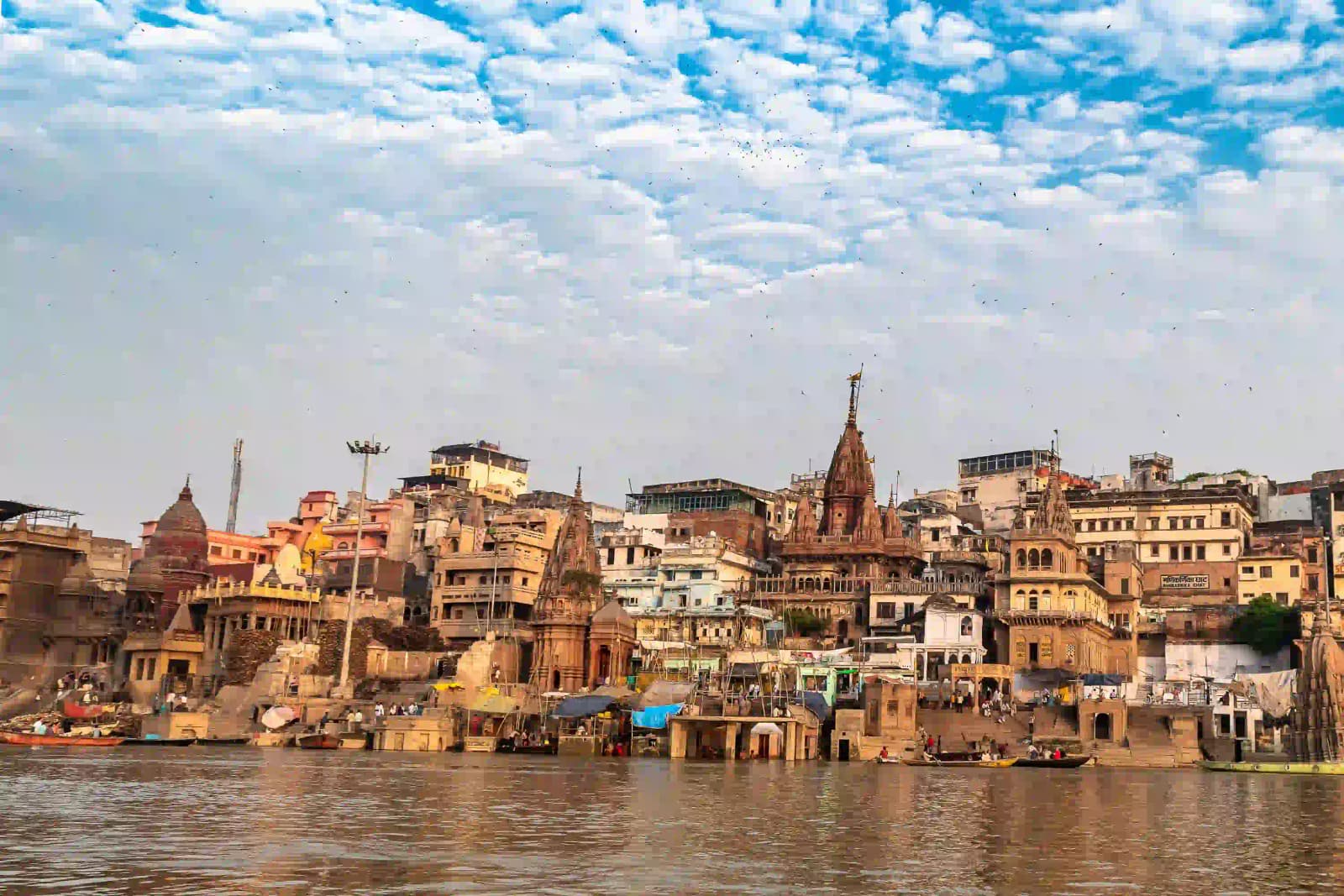
Varanasi is completely different from Delhi, Agra, and Jaipur. The city is famous for its spiritual traditions, ancient temples, narrow lanes, colorful markets, and ghats along the Ganges.
One of the best ways to experience Varanasi is to take an early morning boat ride on the Ganges. As the sun rises, the ghats become active with pilgrims, worshippers, locals, and visitors.
The experience provides a different perspective of the city and is particularly memorable for first-time visitors.
Later, walk through some of the old city's narrow streets and explore the local atmosphere. Varanasi is not simply a destination for sightseeing; much of its appeal comes from observing everyday life and traditional practices.
Attend the Ganga Aarti
The evening Ganga Aarti at Dashashwamedh Ghat is one of Varanasi's most famous experiences.
The ceremony takes place beside the Ganges and involves lamps, prayers, chanting, and traditional rituals. Large numbers of visitors gather along the ghats and on boats to watch the ceremony.
Arrive early if you want a good viewing position. Alternatively, a boat ride during the ceremony can provide a different perspective.
Remember that the ceremony is a religious event, so visitors should behave respectfully and follow local instructions.
Important Places to Visit in Varanasi
Varanasi has numerous attractions, but you do not need to visit all of them to appreciate the city.
The Kashi Vishwanath Temple is one of the city's most important religious sites. Access rules and security procedures can change, so check the current requirements before visiting.
Dashashwamedh Ghat is famous for the evening Ganga Aarti and is one of the most active areas along the river.
Assi Ghat is another popular place, particularly around sunrise and sunset.
Manikarnika Ghat is an important cremation ghat and should be approached with sensitivity and respect.
You can also visit Sarnath, located near Varanasi. It is an important Buddhist site associated with the Buddha's first sermon.
Best Transportation for the Complete Trip
Choosing the right transportation can make a major difference to the comfort of your holiday.
For Delhi, Agra, and Jaipur, a private car is often convenient because the cities are connected by road and you can make stops along the way.
For the longer Jaipur-to-Varanasi section, flying is usually more time-efficient. Trains can also be considered if you prefer rail travel or want to experience India's extensive railway network.
A combination of private car and domestic flight is therefore a practical option for many travelers.
When booking flights or trains, allow some flexibility in your schedule. Delays and changes can happen, especially during busy travel periods or adverse weather.
Best Time for This Tour
The cooler months from roughly October through March are generally popular for visiting Delhi, Agra, Jaipur, and Varanasi.
November through February can provide comfortable conditions for sightseeing, although northern India can experience fog, particularly in the mornings. Fog can occasionally affect road, rail, and flight schedules.
March and early April can also be suitable, although temperatures gradually become warmer.
The summer months can be very hot, especially in Delhi, Agra, and Jaipur. If you travel during this period, plan outdoor sightseeing for early morning or late afternoon and stay hydrated.
How to Plan Your Hotels
Choose centrally located hotels where practical, but remember that "central" can mean different things in each city.
In Delhi, areas with good transportation connections can make sightseeing easier. In Agra, staying relatively close to the Taj Mahal can be useful if you want to visit early in the morning.
In Jaipur, hotels around the central areas provide access to restaurants, markets, and major attractions.
In Varanasi, staying near the ghats can make it easier to experience the riverfront, although some lanes are narrow and vehicles may not be able to reach the hotel entrance. Ask the hotel about luggage transfer and vehicle access before arrival.
Budget for the Journey
The total cost depends heavily on your hotel category, transportation, meals, sightseeing preferences, and travel season.
Budget travelers can use trains, affordable hotels, and local transportation. Mid-range travelers can combine comfortable hotels with private transfers and selected flights. Luxury travelers can choose premium hotels, private guides, chauffeur-driven cars, and upgraded flights.
Domestic airfare between Jaipur and Varanasi should be booked in advance when possible, especially during popular travel periods.
Entrance fees, guides, meals, airport transfers, and local transportation should also be included when calculating your overall budget.
Tips for a Comfortable Trip
The key to planning Varanasi with Delhi Agra Jaipur is to avoid trying to see everything in a short period. These destinations are culturally different, and giving yourself enough time in each city makes the experience more enjoyable.
Book important transportation and hotels ahead of time, particularly during peak travel months. Keep your itinerary flexible enough to accommodate traffic, flight changes, or unexpected delays.
Wear comfortable walking shoes because several attractions involve considerable walking. Lightweight clothing is useful during warmer months, while layers are helpful during the cooler winter season.
Carry a reusable water bottle, sunscreen, basic medicines, and a small day bag. When visiting temples or religious sites, dress respectfully and follow local rules.
In Varanasi, be particularly mindful when photographing people and religious ceremonies. Ask permission where appropriate and avoid treating sensitive religious activities as ordinary tourist attractions.
Common Mistakes to Avoid
One common mistake is spending too much time on the road. Delhi, Agra, and Jaipur work well together because their distances are manageable, but Varanasi is much farther away.
Another mistake is adding Varanasi without allowing enough time there. A rushed visit may mean missing the sunrise boat ride, Ganga Aarti, and the atmosphere of the old city.
Travelers also sometimes underestimate Delhi's traffic or the time needed to reach airports and railway stations. Always leave a reasonable buffer when planning transfers.
Finally, avoid packing every day with sightseeing. A slower itinerary can give you more opportunities to experience local culture rather than simply checking attractions off a list.
Is This Combination Worth It?
For travelers interested in history, architecture, culture, spirituality, and different regional experiences, combining these destinations creates a remarkably varied Indian holiday.
The Golden Triangle provides famous monuments and royal heritage, while Varanasi adds an ancient spiritual and cultural atmosphere. The contrast is one of the main reasons this route is so memorable.
With suitable transportation and at least 8 days, the journey can be organized without making every day exhausting.
Final Thoughts
Planning Varanasi with Delhi Agra Jaipur allows you to experience several distinct aspects of India in one trip. From Delhi's historic landmarks and Agra's Taj Mahal to Jaipur's royal architecture and Varanasi's sacred ghats, every destination offers something different.
For the smoothest experience, use a private car for the Delhi-Agra-Jaipur section and consider a flight between Jaipur and Varanasi. Give yourself enough time in each destination, book major travel arrangements early, and leave some flexibility in the schedule.
With thoughtful planning, this combination can become a fascinating journey through India's history, architecture, culture, and spiritual traditions.
Frequently Asked Questions
1. Can I combine Varanasi with the Delhi Agra Jaipur tour?
Yes. Varanasi can be added to a Delhi-Agra-Jaipur itinerary, although it is farther away and requires additional transportation planning.
2. How many days are enough for Delhi, Agra, Jaipur, and Varanasi?
Around 8 to 10 days is a good starting point. More time allows you to explore each destination at a more relaxed pace.
3. What is the best way to travel from Jaipur to Varanasi?
Flying is generally the most time-efficient option. Trains are another option for travelers who prefer rail travel and have more time.
4. Is Varanasi suitable for first-time visitors to India?
Yes, but Varanasi can feel very different from other tourist destinations. Keeping an open mind and respecting local religious traditions can make the experience more comfortable.
5. What should I see in Varanasi in two days?
Prioritize an early morning Ganges boat ride, the ghats, Ganga Aarti, Kashi Vishwanath Temple if accessible under current visitor rules, the old city, and Sarnath if your schedule allows.