
How to Visit Taj Mahal and Agra Fort in One Day from Delhi?
How to Visit Taj Mahal and Agra Fort in One Day from Delhi?
How to Visit Taj Mahal and Agra Fort in One Day from Delhi?
A one-day trip from Delhi to Agra is an excellent option for travelers who want to experience India's Mughal heritage without spending a night away from the capital. The two most important monuments to include are the Taj Mahal and Agra Fort, both UNESCO World Heritage Sites with strong historical connections. Although the journey requires an early start and several hours of road or rail travel, careful planning makes it possible to visit both monuments comfortably in a single day. The secret is to prioritize the attractions, choose suitable transportation, and leave enough time between sightseeing and your return journey. Whether you are traveling with family, friends, as a couple, or on your own, Agra can be explored efficiently when your itinerary is realistic. This guide explains how to plan your journey, what time to leave Delhi, how long to spend at each monument, what to carry, where to eat, and which mistakes to avoid.
Why Visit Agra in One Day from Delhi?
Agra is one of the most popular destinations for a day trip from Delhi because its major attractions are relatively close to one another. The city was an important center of the Mughal Empire, and its monuments provide an opportunity to understand centuries of Indian architecture, culture, and history in a compact itinerary. The Taj Mahal is internationally recognized for its white-marble architecture and association with Emperor Shah Jahan, while Agra Fort represents the power and grandeur of the Mughal imperial period.
A one-day visit is particularly suitable for travelers with limited time in northern India. You do not need to book accommodation in Agra if you organize the journey efficiently. An early departure from Delhi allows you to reach Agra during the morning, when you can visit the Taj Mahal before moving on to Agra Fort. After lunch and perhaps a short additional stop, you can begin the return journey.
The important thing is not to overload your schedule. Trying to visit every attraction in Agra can make a day trip tiring rather than enjoyable. Concentrating on the city's two principal monuments gives you enough time to appreciate them without constantly rushing.
Delhi to Agra Distance and Travel Time
Delhi and Agra are approximately 230 kilometres apart by road, although the exact distance depends on your starting point and route. The Yamuna Expressway provides a direct road connection between the two cities, and a private car can generally complete the journey in several hours depending on traffic, road conditions, breaks, and weather.
For a same-day trip, leaving Delhi around 5:00 AM is a practical choice. An early start gives you a useful buffer and allows you to reach Agra in the morning. If you are traveling by train, you should compare the available departure and return schedules before booking because your sightseeing time will depend heavily on those timings.
Road travel has one major advantage: flexibility. A private vehicle allows you to travel directly from your hotel to Agra and continue between attractions without arranging separate transportation after arriving in the city. It can be especially convenient for families and small groups.
Best Ways to Travel from Delhi to Agra
There are several ways to make the journey, but the most suitable option depends on your budget, comfort requirements, and preferred schedule.
A private car is ideal for travelers who want flexibility. You can choose your departure time, stop for refreshments, and keep your luggage in the vehicle. A good driver familiar with Agra can also help with parking and navigating local roads.
A train can be a convenient alternative for travelers who prefer not to spend several hours on the road. Several train services connect Delhi and Agra, but schedules can vary, so check the current timetable before planning your itinerary.
A private guided tour combines transportation with sightseeing assistance. This can be useful if you want someone to explain the history and architecture of the monuments rather than exploring independently.
Whichever option you select, check the return arrangements before leaving Delhi. A day trip becomes stressful when the return journey is treated as an afterthought.
Best Time to Start Your Journey
Early morning is the best time to begin a one-day Agra trip from Delhi. Leaving at approximately 5:00 AM gives you a better chance of reaching Agra early enough to enjoy the Taj Mahal without sacrificing your visit to Agra Fort.
Starting early also helps you make better use of daylight. During the hotter months, Agra can become uncomfortable in the afternoon, and walking around large historical complexes requires considerable energy. Visiting the Taj Mahal earlier in the day can therefore make the experience more pleasant.
Winter travelers should consider the possibility of morning fog, which can affect visibility and road travel in northern India. Allow extra time rather than creating an itinerary that depends on arriving at the monument at an exact minute.
Always check the Taj Mahal's current opening schedule before traveling. The monument is traditionally closed to visitors on Fridays, and special circumstances can sometimes affect visitor arrangements.
Morning: Visit the Taj Mahal First
Your first major stop should be the Taj Mahal. Arriving in the morning gives you enough time to explore the monument before moving to Agra Fort.
The Taj Mahal complex includes more than the famous white-marble mausoleum. The entrance structures, gardens, mosque, guesthouse, reflecting pools, and architectural details all contribute to the overall experience. Give yourself time to walk through the complex rather than stopping only for photographs at the main viewpoint.
The monument was commissioned by Mughal Emperor Shah Jahan in memory of his wife Mumtaz Mahal. Construction began in the 17th century, and the complex is widely recognized as one of the finest examples of Mughal architecture, incorporating elements associated with Islamic, Persian, and Indian architectural traditions.
Photography is allowed in many areas, but visitors should follow the current monument rules and security instructions. Avoid carrying unnecessary bags because security checks can take additional time.
Plan approximately two to three hours for your visit, depending on crowd levels and how deeply you want to explore the complex.
Practical Tips for Visiting the Taj Mahal
Comfortable footwear is essential because you will walk a significant distance. During summer, lightweight clothing, sunscreen, sunglasses, and drinking water are useful. During winter, early mornings can be cold, so carrying a light jacket or sweater is sensible.
Do not bring prohibited or unnecessary items into the monument complex. Security regulations can change, so check official visitor information before your trip.
If you want detailed historical explanations, consider hiring a licensed guide. A knowledgeable guide can explain architectural features that you might otherwise overlook, including the marble inlay work, symmetry, calligraphy, gardens, and construction techniques.
Try not to spend the entire visit taking photographs. Once you have captured the essential pictures, take a few minutes to simply observe the building. The scale, symmetry, changing light, and detailed craftsmanship are much easier to appreciate when you are not constantly looking through a phone camera.
Late Morning: Explore Agra Fort
After finishing your Taj Mahal visit, travel to Agra Fort. The two attractions are relatively close, making it practical to visit them on the same day.
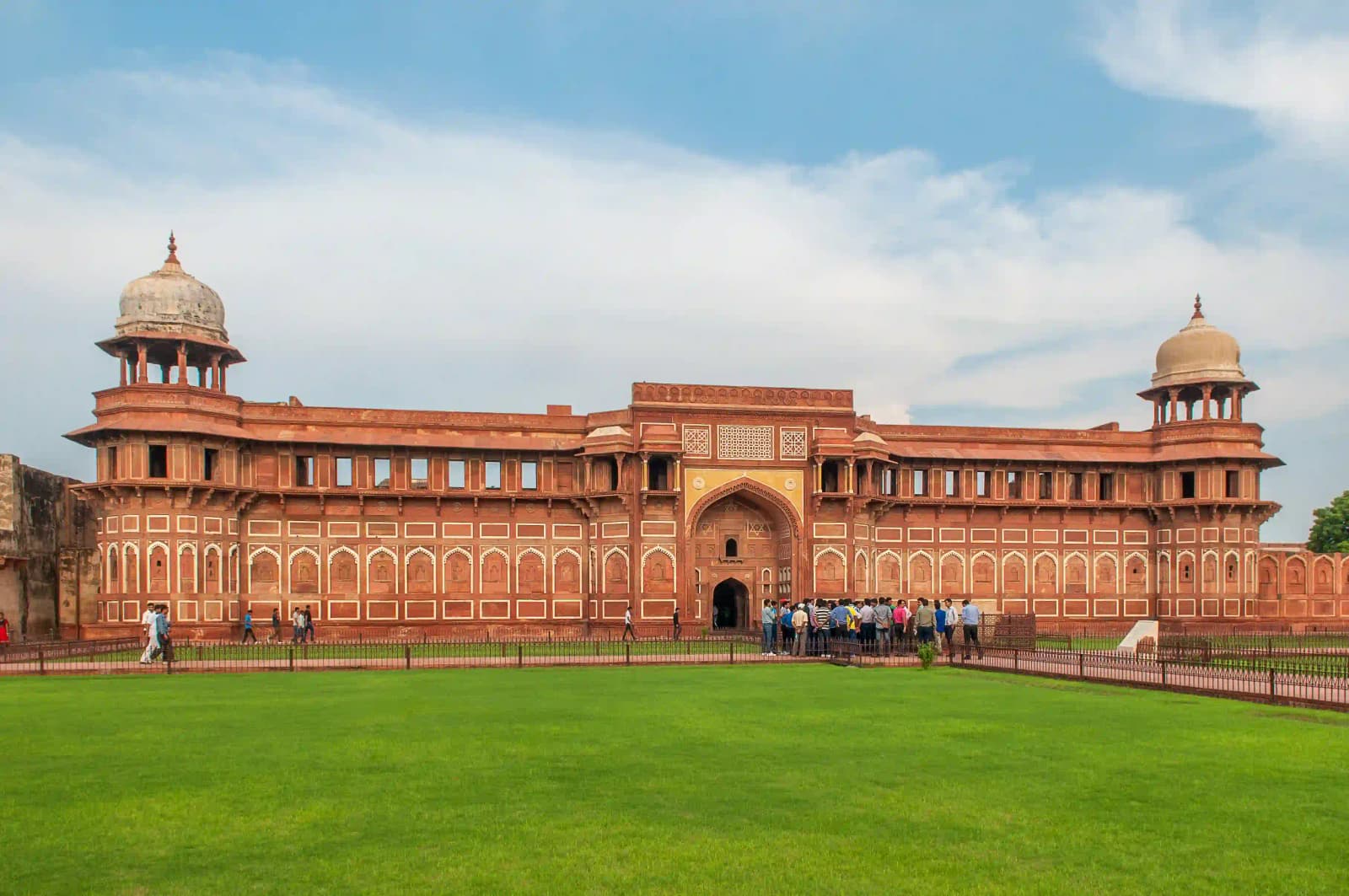
Agra Fort is an enormous red sandstone complex that served as a major Mughal imperial residence. Various Mughal rulers contributed to its development, resulting in a mixture of defensive structures, royal residences, audience halls, courtyards, mosques, and decorative architecture.
One of the most interesting aspects of the fort is its connection to the Taj Mahal. From selected areas within Agra Fort, visitors can see the Taj Mahal in the distance. This visual connection provides a fascinating historical perspective because the two monuments are not simply neighboring tourist attractions; they are connected to the Mughal imperial story.
Allow approximately one to two hours for Agra Fort. History enthusiasts may want longer, while travelers with a tight schedule can focus on the principal courtyards, palaces, halls, and viewpoints.
Why You Shouldn't Skip Agra Fort
Many visitors plan a trip around the Taj Mahal and consider Agra Fort optional. That approach misses an important part of Agra's history.
The Taj Mahal represents one aspect of Mughal architecture and imperial culture, while Agra Fort helps explain the political and residential environment in which the Mughal rulers lived and governed. Its massive walls and elaborate interiors show the combination of military defense and royal luxury characteristic of major imperial complexes.
Visiting both monuments also creates a more complete narrative. Rather than seeing one famous building and leaving, you get a broader understanding of why Agra became such an important city during the Mughal period.
The Taj Mahal and Agra Fort combination is therefore particularly effective for a one-day itinerary because the attractions complement one another historically and geographically.
Lunch in Agra
After visiting the two major monuments, take time for lunch. Agra has plenty of restaurants serving North Indian and Mughlai-inspired food, along with familiar options for international travelers.
If you are on a strict schedule, choose a restaurant that is conveniently located rather than traveling across the city simply to try a particular restaurant. Your goal is to enjoy a relaxed meal without losing too much sightseeing time.
Agra is also famous for petha, a traditional sweet that you can try or purchase as a souvenir. If you are buying packaged food for the journey back to Delhi, choose a reputable shop and check the packaging date.
Travelers who are not accustomed to spicy Indian food should select meals carefully during a day trip. An upset stomach can quickly ruin the remainder of your itinerary.
Should You Visit Another Attraction?
If you finish Agra Fort early and have several hours before your planned departure, you can consider adding one more attraction. Mehtab Bagh, located across the Yamuna River, is known for views toward the Taj Mahal and can provide a different photographic perspective.
Itmad-ud-Daulah, sometimes called the "Baby Taj," is another possibility for travelers interested in Mughal architecture. However, whether you should add it depends entirely on your schedule.
Don't add another attraction simply because you feel you have to maximize every minute. If you have already spent several hours walking through the Taj Mahal and Agra Fort, a leisurely lunch and an early departure may be more enjoyable.
How to Plan Your Return to Delhi
The return journey deserves as much attention as the morning trip. Try to leave Agra with enough time to account for traffic and unexpected delays.
If you have a flight, train, or important appointment in Delhi later that evening, build a generous safety margin. A road journey cannot be predicted with complete precision, and traffic conditions can change during the day.
If you are traveling by private car, discuss the approximate return departure time with your driver before beginning your sightseeing. This avoids confusion later and ensures that the vehicle is ready when you finish lunch or your final attraction.
A realistic schedule might look like this:
- 5:00 AM: Depart from Delhi
- 8:30–9:30 AM: Arrive in Agra, depending on traffic and breaks
- 9:00–11:30 AM: Visit the Taj Mahal
- 12:00–1:30 PM: Explore Agra Fort
- 1:45–2:45 PM: Lunch
- 3:00–4:00 PM: Optional attraction or free time
- 4:00–4:30 PM: Begin return journey
- Evening: Arrive back in Delhi
The exact times should be adjusted according to your transportation, monument opening arrangements, season, traffic, and personal preferences.
What Should You Carry for the Trip?
Keep your belongings simple and practical. A small daypack should be enough for most travelers.
Carry your identification, phone, charger or power bank, water, sunglasses, sunscreen, necessary medication, and some cash. Comfortable shoes are particularly important because both major monuments involve considerable walking.
If you are traveling during winter, take a light layer for the morning. In summer, breathable clothing and sun protection are more important.
Avoid carrying large luggage into sightseeing areas. If you are traveling with suitcases, leave them securely in your hotel or vehicle where appropriate rather than taking them unnecessarily to monuments.
Best Season for a Delhi-Agra Day Trip
The cooler months are generally more comfortable for walking around Agra's outdoor monuments. October through March is a popular period for sightseeing, although winter mornings can sometimes be affected by fog.
Summer temperatures can become very high, making afternoon sightseeing tiring. If you travel during this season, the early start becomes even more important.
The monsoon period can bring rain and humidity, but the weather can also create a different atmosphere around the monuments. Check the forecast before leaving Delhi and keep some flexibility in your itinerary.
Regardless of the season, comfortable footwear, water, and appropriate clothing can make a noticeable difference.
Private Tour or Independent Trip?
An independent trip gives you control over your schedule and can be less expensive if you are comfortable arranging transportation and tickets yourself. It is particularly suitable for experienced travelers who enjoy exploring independently.
A private guided tour provides more convenience. Transportation, sightseeing order, and historical explanations can be arranged in advance, allowing you to focus on the experience rather than logistics.
Families may appreciate a private tour because the itinerary can be adjusted around children or older relatives. Couples may prefer a private car for greater flexibility, while solo travelers may choose trains or organized tours depending on their budget.
There is no single approach that suits everyone. Consider your travel style, budget, comfort preferences, and how much planning you want to handle yourself.
Common Mistakes to Avoid
The first mistake is leaving Delhi too late. A late start can force you to rush through both monuments or skip one entirely.
The second mistake is planning too many attractions. The Taj Mahal and Agra Fort already provide several hours of substantial sightseeing, and both require walking. Adding four or five more locations can turn the day into a race.
Another mistake is failing to confirm opening arrangements. Check the current official information before your trip, especially if your planned date falls on a Friday or a major holiday.
Finally, don't forget the return journey. It is easy to become absorbed in sightseeing and postpone departure until late afternoon. If you want to reach Delhi comfortably in the evening, establish a firm departure window.
Is One Day Enough for Agra?
For the two major monuments, one day can be sufficient. You can visit the Taj Mahal in the morning, explore Agra Fort afterward, enjoy lunch, and return to Delhi without staying overnight.
However, one day does not allow you to experience every part of Agra in depth. If you are particularly interested in Mughal history, architecture, photography, local markets, or nearby heritage sites, staying overnight would provide a more relaxed experience.
For travelers with limited time in India, however, a carefully planned day trip remains a practical way to experience the city's most famous landmarks.
The combination of the Taj Mahal and Agra Fort is especially suitable because it gives you two different perspectives on Mughal history within the same trip.
Conclusion
A one-day trip from Delhi to Agra can be simple and rewarding when you plan around the city's two principal monuments. Start early, travel to Agra using a reliable transportation option, visit the Taj Mahal first, and then explore Agra Fort before taking a lunch break. If you still have plenty of time, add one optional attraction, but avoid filling every available minute.
The most important part of planning is allowing flexibility. Road traffic, weather, queues, security procedures, and visitor numbers can all influence your schedule. Check official monument information before traveling and keep a comfortable buffer for your journey back to Delhi.
For first-time visitors, the Taj Mahal and Agra Fort offer a strong introduction to Agra's Mughal heritage. With an early departure and a realistic itinerary, you can experience both landmarks in one day and return to Delhi with enough time to relax after your journey.
FAQs
Can I visit the Taj Mahal and Agra Fort in one day from Delhi?
Yes. An early departure from Delhi makes it possible to visit both monuments on the same day. Most travelers should prioritize the Taj Mahal in the morning and Agra Fort afterward.
How early should I leave Delhi?
Leaving around 5:00 AM is a practical option for a day trip. Your exact departure time should depend on your hotel location, transportation method, traffic expectations, and the current opening arrangements at the Taj Mahal.
How much time do I need at Agra Fort?
Around one to two hours is suitable for many visitors. History enthusiasts and photographers may prefer more time, while travelers with a tight itinerary can focus on the principal sections.
Is a car better than a train for a one-day Agra trip?
A private car provides greater flexibility and allows you to travel directly between your hotel and Agra's attractions. A train can be convenient and may reduce road travel, but you will need local transportation after arriving in Agra.
Is it possible to visit another attraction after Agra Fort?
Yes, if your schedule allows. Mehtab Bagh and Itmad-ud-Daulah are possible additions, but you should keep enough time for lunch and the return journey to Delhi.